Capitalism: On Its Way Out?

I’m going to try to keep this simple. The answer to my own question in the title of this post is: of course. All things come and go. The era of capitalist domination will inevitably come to an end one way or another. How long capitalist domination can hang on is open to conjecture but it carries within itself the seeds of its own destruction.

I’m actually researching a series of blog posts on the relationship between capitalism, liberalism and democracy. Below I consider the most important dimensions of capitalism including its life-historical reality, its structure as a set of social relations, its difference from other modes of human production and its effects on morality and other aspects of life. If you haven’t read my post Is Canada a Capitalist Country?, now would be a good time. I may have been a bit too strident in that post, but I’ll try to make up for that here.

Some writers, actually many writers who might now be considered apologists for capitalism (and some left-wingers too) claim that the spirit behind capitalism has always existed in us humans. They argue that the key to capitalism becoming the dominant mode of production in history was removal of the fetters that kept it from emerging. I don’t buy that and neither does Ellen Meiksins Wood. Capitalism didn’t evolve next to feudalism and just wait until the time was right to overthrow feudal social relations. Capitalism grew out of the failing social relations of feudalism.

Simply capitalism is based on the system of wage labour. As feudalism was on its way out, there was a lot of stress between serfs and lords. Many lords couldn’t keep up with their responsibilities towards their serfs and serfs were reluctant to wait around for the lords to get their shit together. The productivity of agrarian England, particularly regarding wool production, for example, was rapidly diminishing to the point where in the 17th Century a half of English workers (called servants then) were wage labourers. I’ll not get into the specific mechanisms and forces that led to that outcome in this post but will explore it later in review of C. B. Macpherson’s book The Political Theory of Possessive Individualism (Oxford, 1962).

As workers we have a relationship to our bosses, our employers, based on wage labour. In a classic capitalist scenario, a capitalist hires workers to extend his or her own capacity to produce commodities for sale. It’s no surprise that businesses that mine oil and gas, for example, are referred to as petroleum producers. That designation does not include the people who work for those businesses. Hasbro is a toy producer. No reference to their workers as the real producers. Their labour power has been bought and paid for by the capitalist and he or she can therefore refer to it as his or her own labour. After all, it was bought and paid for.

Capitalists buy our labour power. Not our labour, but our labour power, our capacity to work. Of course a lot of us never work for an individual capitalist. We work for governments at various levels or non-profits. So, it’s more accurate to say that workers as a class work for capitalists as a class.

The system of wage labour has infiltrated every nook and cranny of our worlds. We expect to grow up to be nothing else than workers or employees (as many people prefer to be called) and we are trained at home and at school to expect no other outcome. We just want a good job. So few of us can ever become capitalists despite our dreams. Besides, the reality is that we, as individuals, are not very important in the scheme of things. It’s capital versus labour on a grand scale that counts historically. Individuals are simply personifications of our classes and no one is indispensable. Steve Jobs, the founder of Apple died a while ago but Apple lives on. Us workers are a dime a dozen. You want to find meaning in your life? For most people it’s futile to even contemplate finding ‘meaning’ in their work.

So, why will capitalism die? Because of its own efficiency and effectiveness. Due to severe stresses often caused by periods of overproduction of commodities, the capitalist class embarks on a program of renovation that changes the relationship between capital and labour. Globalization is a result of that renovation. Capitalists seeing their profits drop from failing sales have some options. They can curtail production and they can make their production processes more efficient, meaning that it takes fewer units of labour to produce the same product. They can also move production around like build a factory in Sri Lanka to take advantage of low wages, favourable labour and safety laws, better access to raw materials, and new markets.

Let me back up a bit to a very simplified illustration of what happens when someone wants to produce a product. Let’s look at a hypothetical product called a widget. It’s for ducks to perch on. So Sam McGee, a prominent local duck hunter and entrepreneur decides he wants to produce widgets. What does he do? Well, he gathers together all the things that he will need, what I call INPUTS in the table below. He hires a manager and the manager gets on with it. Sam sits back and watches the whole thing unfold from his condo in Panama.

The dollar values on the right in the table below are the costs per widget. In this case they add up to $28.50. He envisions making a profit of $12.50 per widget. Not bad. Note that McGee has to hire workers before he starts operations. Workers are part of the inputs. Workers do not share in the profits of the business. Workers’ labour is part of the costs of production like the land, equipment, and raw materials. McGee has agreed to pay market value for all the inputs. In this scenario, McGee gets $40 per widget which he also sells at market value. So how does McGee make money?

Sam McGee’s World

The Widget factory
 INPUTS
raw materials$2.00
equipment$4.00
land$5.00
buildings$5.00
labour$8.00
power$0.50
overhead$4.00
TOTAL$28.50
OUTPUTS
Widgets $40.00

Well, McGee is a clever kind of guy and he’s figured out that he can make money as things are. All he has to do is make sure that his costs of production amount to less than what he can get for widgets on the market. If the workers shared in the profit, the table above would look somewhat different. The $8.00 Sam pays his workers would rise to $20.50. So, the only way Sam cam make money is by not paying his workers full value for their labour. The $12.50 in profit comes from not paying his workers a full share of the market value of the widgets.

His cleverness will be tested, however, when the market for widgets collapses because he’s now produced a lot of widgets and he’s saturated the market and because he also now has competitors that pay lower wages and make even more money than he did. Damn. What to do? Cutting production is an option. The problem is it takes 10 workers to make 100 widgets a day. They can’t make any more and if they make any less, the costs of labour per widget go up. So what to do. Sam, the clever guy, knows a guy in welding and fabrication who says he can build Sam a piece of equipment that will allow for the same output of widgets but using half the current employees. Not only that, the equipment will allow Sam to tailor his production of widgets to any number he wants. Bonus! Sam gets on that right away, installs the equipment and fires half his staff. He also cuts back on production temporarily and lays off half his staff again. He’s now down to 2 workers and is still producing widgets, but a lot fewer of them. Sam is still making money but his workforce is not doing too well by him. As a side thing, Sam needs to also figure out how to make flimsier widgets. The ones he makes last way too long. He has to cultivate a forever returning clientele.

I know this is a huge simplification of how capitalism works, but it’s the essence of the thing at least from the production end of things. Of course, there’s money to be made in the distribution of commodities too and in their consumption. And if Sam needs to borrow money all the better. Then Goldman Sachs can get rich too.

What I’ve just shown here, simplified as it is, is the way that the labour force is being squeezed right out of existence. Either production is automated to eliminate workers altogether or the value of labour power is so reduced that workers can’t survive on the wages they are offered. We’re in that place right now. Simply put, there is a greater and greater amount of capital going into production at the expense of labour and as the system gets closer and closer to essentially eliminating necessary labour, the margins of profit drop, and capital can no longer exploit workers.

Oh, but it’s so much more complex than this. Governments have gotten into the picture helping Sam McGee in his time of terrible trouble partly by helping to manage and maintain his now mostly unemployed workers. (On EI, they are always free to come back to work. They constitute a free pool of labour for Sam). Banks too have joined governments to ensured that Sam will be fine. After all, Sam is the creative producer and his workers are nothing more than part of the cost of production. Sam needs our help!

Now think of Sam McGee as the totality of global commodity production and think of his workers as the global labour force and you will begin to get the picture.

In my next post I tackle how capitalism along with its essential liberal legitimation has infiltrated our very psyches, our values and our morality, and I will address how that infiltration is not as solid as it might seem.

Are you self-absorbed or self-effacing?

Recently, Dr. Brian Goldman, host of CBC’s White Coat, Black Artinterviewed Elizabeth Rathbun, a 66 year-old Vancouver resident with severe MS. Her story is compelling but it’s not the focus of this blog post. The focus here is narrative clues to the tension between us as individuals and society. I use Goldman’s interview with Rathbun as a vehicle only. I could pick millions of similar interviews or conversations that have the same dynamic and I have many in computer files. The fact is, I’ve just listened to the most recent episode of White Coat, Black Art and this interview struck me as prototypical example of the type of narrative I want to analyze here. 

For a long time I’ve been interested in individualism versus society. There’s a lot of great literature around this topic but Norbert Elias tops the list of sociologists I think of when I try to parse out the relationships we have with ‘society’. In psychological terms the relationship between the individual and society is bound up with all manner of confounding moralisms and ideological constructs. Like a number of other sociologists I find that conversation and narrative are a treasure trove of hints and hypotheses about our social relations. 

So, aside from the story itself, what is it about what Elizabeth Rathbun says to Brian Goldman that catches my attention? Read the following three paragraphs from the interview. Rathbun is talking about her experience with Multiple Sclerosis (MS). Her MS is a particularly debilitating strain, leaving her in a mechanized wheelchair to get around, and in constant need of care. 

“What you discover about yourself is an enormous capacity for denial. Denial that it’s happening. Denial of what the future might hold … and a tremendous reluctance to give up the ways in which you look after your family, and the ways in which you contribute in the community.”

“Each time you think you’re there, there’s more progression. There’s a new development, a new thing to be incorporated in your lives and you start all over again.”  

“If you value independence so supremely that you do not want to help with the most basic things like dressing or brushing your teeth or showering … then that may be your line in the sand, but it’s not mine. I couldn’t care less,” she said, adding she’s “thrilled” the government now allows people to make the choice to have an assisted death.

Before going on I will now edit Rathbun’s comments a little and reproduce my edits below. See if you can tell the difference between the originals and my edits. Here are my edited versions of her comments:

“What I discovered about myself is an enormous capacity for denial. Denial that it’s happening. Denial of what the future might hold … and a tremendous reluctance to give up the ways in which I look after your family, and the ways in which I contribute in the community.”

“Each time I think I’m there, there’s more progression. There’s a new development, a new thing to be incorporated in my life and I start all over again.”  

So, why did Rathbun not use I in her comments on her MS? Let’s be clear, I’m not picking on Rathbun nor finding fault with the way she answered Goldman’s questions. Back in 2006 a number of my students in a research methods course undertook some research on what we called pronoun bending. Pronoun bending describes the use of the personal pronoun you rather than I in daily conversation, interviews, etc., when I often seems the most appropriate pronoun to use. One of the research papers we used as a source for trying to figure out the meaning of this phenomenon was called The Indefinite Youby Hyman (2006).[1]He concluded that the use of the indefinite you was in his words youbiquitous. Rathbun is not alone in her use of the indefinite you. We all do it! I’m adding the paper my students put together in 2006 to a page here. It would be helpful if you read it now, especially the findings at the end of the paper. 

At times people being interviewed or in daily conversation will start off by using I then switch to you at certain times. My students were most interested in why that happened. Hyman (2006) and Senger[2](1963) in a much earlier paper suggested a few possible reasons. It could be a defense mechanism or a means of distancing oneself from a painful reality. It could be a way of showing that we’re not so self-absorbed that we can’t relate to other people and their problems.

One clear moral/behavioural principle in our world is that we shouldn’t brag always using I, I, I in our conversations. It’s okay to be an individual, but we must also recognize our social connections and our reliance on others. Self-effacement is problematic, but it’s non-threatening too. When Rathbun says with reference to dealing with a debilitating disease like MS that “What you discover about yourself is an enormous capacity for denial,” she is unconsciously appealing to our sense of belonging and understanding. She could just as easily have said “What I discovered about myself is an enormous capacity for denial.” In using the indefinite you, she is implicitly imploring us to agree with her. She is subconsciously saying “You know what I’m going through, don’t you. I’m not alone in feeling this way.” 

Now consider Rathbun’s third paragraph above. I repeat it here:

“If you value independence so supremely that you do not want to help with the most basic things like dressing or brushing your teeth or showering … then that may be your line in the sand, but it’s not mine. I couldn’t care less,” she said, adding she’s “thrilled” the government now allows people to make the choice to have an assisted death.

In this paragraph she is using an indexical use of you. In other words, she is pointing to you specifically and saying that may be where you would draw the line in the sand, but not me! “I couldn’t care less.” Wow. She’s owning that one. There is a switch in this quote from using you to using I, but it’s a ‘natural’ one, not one from I to an indefinite you. 

This post is plenty long enough already, so instead of going on and on, I’d like to challenge you to pay close attention to the conversation you have or hear and try to pick out speakers’ uses of the indefinite you. I think it’s a fun exercise. And please read Pronoun Bending on this blog. 


[1]Hyman, Eric, “The Indefinite ‘You,” English Studies, 2004, P.161-167

[2]Senger, Harry, L.,  “The Indefinite ‘You’- A Common Defense Mechanism,” Comprehensive Psychiatry, Vol. 4 No. 5 (October), 1963, P.358-363.

The Trip (at 12,130 meters).

Flying often makes me wistful and pensive. There’s something about being strapped in a 737 flying over varied prairie and mountainous landscapes at 12,130 meters that brings it on. Well, flying in a much smaller Bombardier turbojet between Edmonton and Calgary also got me musing, especially about the place of humans in the world and about time.

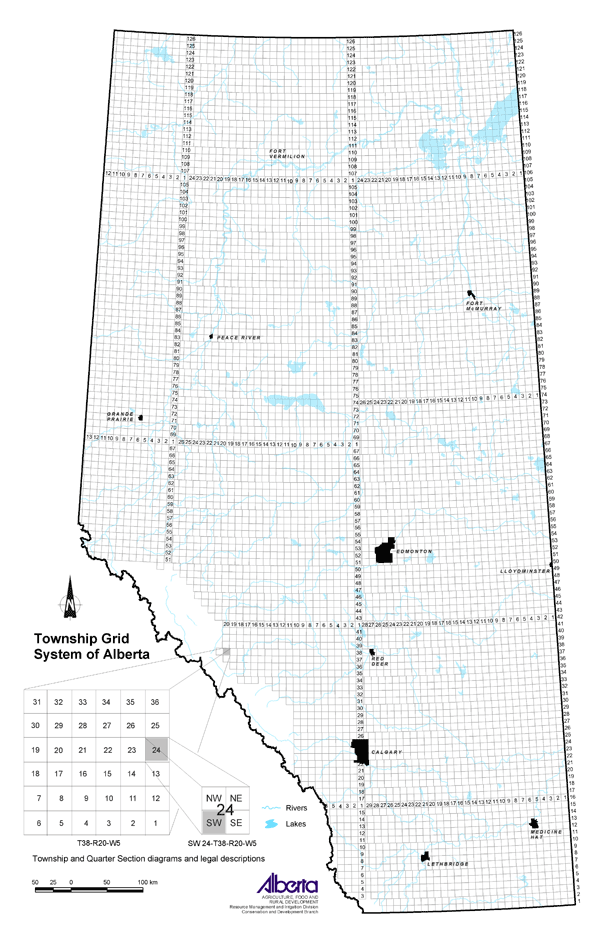
We had flown from Comox on Vancouver Island directly to Edmonton in central Alberta a few days earlier to visit my sister-in-law who lives in the Dickensfield care home in Edmonton and to see my brother who has recently moved from Regina to Edmonton. The day before yesterday my niece drove us to the Edmonton International Airport for the start of our trip home. At this time of year Edmonton is covered in dirty snow and when it thaws a bit and then freezes again, the side roads can get treacherous, but the highways were clear and the traffic was light. It was 6:30 AM and the temperature in Edmonton was -8 ˚C and steadily dropping. I took the picture below with my iPhone somewhere between Edmonton and Calgary. I don’t know at what altitude we were flying but it couldn’t have been more than 3,000 meters. The patterns created by carving up the prairie into quarter sections is clearly visible in the photograph I took from the cabin. The snow helps delineate the quarter sections. The other photograph is a screenshot of the Alberta township system map that you can find here. Every square inch of the land is marked by human intervention. The symmetry evident in both photographs is superimposed on the landscape and is obviously not natural. Still, the grid is plain to see in the photograph from 3,000 meters up. Fences and tree breaks attest to the surveyor’s work and our penchant to delineate land to own, clearly separate and distinct from our neighbour’s land, forces us to recognize our pretence of dominance over the land. The scars are real.

Where is there room for burrowing owls, bison, prairie dogs? In patently very few places it seems. That’s plain to see. Humans have been transforming this landscape for centuries, millennia even, but nothing on the scale of the past 100 years. Alberta is the playground of humans for now at least. Wildlife (freelife) must find pockets of compatible space in the interstices of human culture to build homes and forage for food. In another 10,000 years, the scars that are evident from 3,000 meters up will likely be erased. ‘Alberta’ as a political entity will be no longer. Burrowing owls will likely be extinct. In a hundred million years new species may roam the land. In a half a billion years, the prairies may be lake bottom or the Rockies may migrate further east. The continents as we know them will be undone and redone. I don’t know how the future will unfold in detail. Geomorphologists know about these things, about plate tectonics and the like. All I know for certain is that everything will change radically over time.

Regardless, the way we think of time is conceptually extremely limited. Brian Edward Cox OBE, FRS, English physicist who serves as professor of particle physics in the School of Physics and Astronomy at the University of Manchester and BBC documentary commentator argues that the universe is finite and will come and go in the blink of an eye. Our human lifespans are infinitesimal yet we live them as though they are forever. The Prairies and the Rocky Mountains seem forever but they are not. They will ‘die’. The speed at which they will die is extremely slow, of course, from our perspective, but there are other perspectives which have alternative assessments of the passing of time. Cox, for example, argues for a different conception of time than the one that rules our lives. For him time on a universal scale is vastly different than how we perceive of time at the human scale. However, for him, that matters little. All time happens in the blink of an eye.

My grandparents are dead. My parents are dead. I’m next in line. My children and grandchildren will follow me into the void. My life has passed in the blink of an eye. It really does seem that way to me. On a planetary scale, the Rocky Mountains will be gone in the blink of an eye as will the scars that crisscross the Alberta prairie.

Flying over the Rocky Mountains, then the central valleys of British Columbia and finally over the Coastal Mountain Range at 12,130 meters, before descending over the waters of the Salish Sea to the airport in Comox, it was evident that the landscape was not conducive to carving up the way Alberta has been into quarter sections. Mountainous terrain is hard to do anything with from a human point of view. Agriculture is sparse. Of course there’s always mining, logging and skiing, but only in limited areas. Many of the mountain ranges are inaccessible, the peaks are sharp and the mountain sides are stratified attesting to the fact that these peaks were once pushed up from deep inside the core of the continental plates. The Burgess Shale, close to Field, BC, in the Rockies contains innumerable fossils. From the Burgess Shale website:

The locality reveals the presence of creatures originating from the Cambrian explosion, an evolutionary burst of animal origins dating 545 to 525 million years ago. During this period, life was restricted to the world’s oceans. The land was barren, uninhabited, and subject to erosion; these geologic conditions led to mudslides, where sediment periodically rolled into the seas and buried marine organisms. At the Burgess locality, sediment was deposited in a deep-water basin adjacent to an enormous algal reef with a vertical escarpment several hundred meters high.

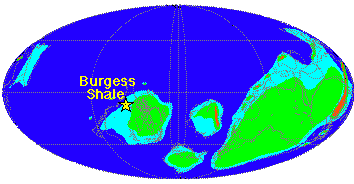
From ocean floor to mountain peak in a few million years. In fact, when the Burgess Shale was created, the planet looked entirely different than it does today. This map from the same website noted above shows that the continents were not yet formed as we know them.

British Columbia has been carved up for the needs of humans, and some of those carvings are visible at 12,130 meters, but not in the same way as Alberta. BC has nowhere near the absolute symmetry of Alberta’s political-economic divisions. Mountains and prairies offer very different options for human interference. In a million years that human interference will not likely be evident at all.

So, things come and go. People, mountains, plains, continents, planets, even universes. We are all finite. We all have our turn to get transmogrified with every atom of our bodies converted to other uses for other organisms. From that perspective, mountain ranges and prairies are no different from each of us as individuals.

That’s life. Flying gets me thinking about these things.

GM Committed to Canada?

GM, on its website claims in very large text that it is committed to Canada and its employees in Oshawa.

Well, although I don’t doubt the sincerity of the person who actually wrote this material and even of the GM company itself, it’s obvious that GM is not and cannot be committed to Canada ahead of its commitment to itself and to profit. It will sacrifice whatever it needs to in order to stay alive as a viable company.

Be warned, the Oshawa layoffs are just the beginning of a trend in GM towards hiring new kinds of engineers, many out of Silicon Valley, with a plan of producing electric and self-driving vehicles. According to the company’s website and to industry analysts, GM sees Cadillac as its first electric car offering to compete with Tesla. Now that’s interesting! It proudly states that unlike European carmakers GM has not opened a factory in Mexico for 10 years. That may be true, but that doesn’t mean that its current plans don’t include bringing parts from all over the world to its assembly plants in North America where their cars are ‘made’. It’s future does include layoffs of over 20,000 workers. In that, GM is not much different from any other large global secondary manufacturing organization.

Obviously, GM is in the business of selling cars and trucks. It doesn’t help the company’s image among nationalists that it’s willing to put 2600 Oshawa workers out of work leaving the plant ‘unallocated’. Unallocated means they have no plans to produce anything in that plant after the plant closes in December or ever. So, to mollify the opposition, GM says that over half of its employees at Oshawa Assembly were due to retire anyway. Its website reports that:

  • GM Canada has committed millions of dollars to help our Oshawa Assembly employees transition and retrain – so our employees and their families know that if they choose not to retire on their GM pension (more than half of our hourly workers at Oshawa Assembly will be eligible for their GM pension when production ends at the end of 2019), there will be an opportunity for them to transition to one of 5,000 good available new jobs in Durham Region and GTA and GM will help fund the transition training for them.

It’s true that GM is making some generous offers to their outgoing employees. These include help transitioning to other jobs, allowing the continuation of employee benefits and even a $20,000 voucher towards a new car. So, even as they go out the door of GM’s Assembly plant, workers can drive away in a new GM car! What have the employees to complain about?

Well, they may have a lot to complain about, but I’m not sure a lot of people are going to listen to their complaints. They’ve had very ‘cushy’ jobs with good pay for decades now. No one promised you a rose garden, right? I can’t imagine a lot of Alberta oil sands workers being very sympathetic. “Let the Eastern bastards freeze in the dark!” “We’re losing our jobs, it’s only fair that you would lose yours too!” No, sympathy is not a quality we should expect to see expressed much anymore. Liberalism and libertarianism have conditioned us to believe that whatever happens to us is our own responsibility, our own fault, good or bad. Piss on all the rest of you!

Getting back to a point I alluded to earlier, GM is not committed to Canada, at least not per se. It will be committed to Canada as long as it serves its economic interests. GM’s economic interests and survival as a global corporation easily trump any commitment it might have to Canada or any other country for that matter, including the US.

In fact, Canada as a political organization is dedicated to providing the environment necessary for GM and other companies like it to continue to make a profit. Canada and the Ontario government have just invested $150 million in Algoma Steel, a company which is based in Sault St-Marie, now owned by an Indian company and is now called Essar Algoma Steel. To “Canada” it matters not who owns a company and where its head office is located as long as the government can claim that ‘Canadian’ jobs will be protected and saved. Inevitably, Canada cannot protect all of ‘our’ jobs all of the time. Business corporations are the ones to decide on jobs although government itself also creates a lot of jobs, many of them in agreements to help out ailing parts of the country, in policing and regulating our activities, in ensuring that we have the education business needs and in any other way to make us job ready, more or less healthy and well-fed.

The bottom line is that ‘Canada’ is the partner of global corporate capitalism for the maintenance and management of the labour force using coercion or ideology, as well as for ensuring a good environment for global business. It also serves to provide the political/legal framework for our individual liberty to sell our labour power to whoever we want and for any capitalist with money to buy our labour-power. All countries are to a varying extent. Canada is not a stand along political entity with its own economy, society, legal system, etc. In fact the only thing that holds this country together is not economy or society but our shared citizenship and residency (for the most part). Attempts to rally Canadians around economic or social initiatives are bound to fail. It’s only in sports that Canadians can get together when ‘our’ team plays against the ‘Americans’ in the World Cup of Hockey.

The Wet’suwet’en Question.

I’m no expert on this issue, but I have enough experience as a sociology and anthropology teacher and researcher to know a few things that could be of interest.

First, as a number of Indigenous writers have pointed out, the tensions between elected tribal and band councils and hereditary leadership is often palpable. Some of my Kwakwaka’wakw acquaintances years ago discussed the tensions in Alert Bay (specifically) between the elected councils and the hereditary chiefs. It’s my belief that the situation is much the same today and in my opinion is squarely the responsibility of the Federal Government’s paranoia regarding Indigenous peoples.

In fact, the Federal Indian Act of 1876 laid out a new way of governance for First Nations. They were no longer to be led by hereditary leaders. They were now obliged to establish elected band councils, a process overseen by the ubiquitous Indian Agent in a highly paternalistic relationship with First Nations peoples. Thus, band and tribal councils are creatures of the federal government and are funded by the government with the underlying threat that funds could be in jeopardy if government policy was not followed. Besides, First Nations had to become democratic, now didn’t they? No more of this hereditary leadership stuff!

My intent here is not to suggest that all band and tribal council members are toadies and meek adherents to government objectives. Some are, there’s no doubt about that, but many are clearly dedicated to their members and are honest and hard-working. That said, the tribal and band council structure is still a creation of the federal government and that has repercussions impossible to ignore.

It’s been widely reported that the elected councils in the Wet’suwet’en territory are at odds with hereditary chiefs. That seems clear from an industry website that posts the names of the 20 band councils who support the TransCanada pipeline. That list includes the Wet’suwet’en and Witset First Nations. The Hereditary Chiefs, according to the BC Treaty Commission, are at Stage 4 treaty negotiations at the moment. They write on their website that “Our office is governed by the Wet’suwet’en Hereditary Chiefs residing throughout the traditional territories. The Chiefs meet at least monthly and often weekly to address specific issues that management needs direction for. Meetings are held throughout the territories in various locations.”

First Nations in BC have been placed between a rock and a hard place by the paternalistic and racist federal government for the last 140 years. The government has done everything it can to tear First Nations communities apart, marginalizing them and taking their land. It has largely been successful in doing that. The current federal government, rhetoric aside, seems bent on the same course of action set decades ago by its predecessors. However, there are First Nations who are not ready to lie still and take it. They are fighting an uphill battle because it seems that the government’s support for private business entreprise trumps all relations with the hereditary leadership of First Nations all over this province every time. Moreover, First Nations themselves have to deal with the divisions within their own ranks while resisting bribes and threats. It’s not an easy situation to be in.

The RCMP

Some would say that the RCMP are just doing their job in enforcing an injunction granted by the courts in favour of TransCanada’s Coastal Gaslink Pipeline. Others including the AFN and the Union of BC Indian Chiefs have denounced the RCMP tactics. The federal and provincial governments have argued that they are taking an ‘arms-length’ approach to the BC Supreme Court injunction and that the parties involved need to settle their issues responsibly and peacefully. That’s disingenuous in my mind.

What I find particularly troublesome about the RCMP presence is its militarized aspect. The members attending are dressed in military garb, not an inducement to peaceful settlement of this issue. Put your regular uniforms on people. Nobody in the encampments is about to shoot you.

Government Involvement

Scott Fraser is my MLA and at this moment I’m not impressed with what he or his government is doing. He and his government must take a leadership role in this situation. The battle for the Bulkley Valley is not one between equal combatants. I don’t know what the answer is, but I would like to see my MLA engaged publicly. Is there a solution to this issue? Do the First Nations have to again give up more of their traditional lifestyle? If so, tell them that, to their faces.

MAKE AMERICA DEMOCRATIC AGAIN.

NIck Orts of the Wharton School at the University of Pennsylvania wants to MAKE AMERICA DEMOCRATIC AGAIN. I guess he thinks it has lost the justification for using that descriptor. You’d think it was a no-brainer. I mean, everybody knows America is democratic!

Click on the link above to read the article by Orts. His concluding sentence in this The Atlantic article published on January 2nd of this year is:

“If a Democratic wave continues into 2020, then who knows, a Senate Reform Act could make America a democracy again.”

How much do you know about how the Senate is elected in the United States. This article is an eye opener maybe even for Americans!

Go read the article in The Atlantic! Learn about American Democracy!

My brain is on fire!

Since I started doing research for my blog posts on democracy and capitalism I’ve done a ton of reading and I could do a ton more. I’m scouring my own bookshelves. I’ve got a fair bit of material on the topic but I’m also mining the Gutenberg Project and the Internet Archives online. At the moment I’m reading C.B. Macpherson’s The Political Theory of Possessive Individualism: Hobbes to Locke but I’m also glancing at many other books as I concentrate on Macpherson including another of his books, The Real World of Democracy (1965) based on the Massey Lectures. His work is superlative. What a critical mind! I have Hobbes’ The Leviathan and John Locke’s two political treatises, but I don’t have the time or inclination to wade through their work in the original, not when I’ve got Macpherson who’s done it for me already.

Macpherson’s notion of possessive individualism aims to tie together capitalism, democracy and liberalism during the 17th Century when Hobbes and Locke were active English philosophers. Capitalist industrialist production really took off in the middle of the 18th Century, but the slow breakdown of feudal social relations around reciprocity between feudal lords and their serfs started much earlier. As Macpherson notes, the possessive market society that was gaining power in the 17th Century was a model from which philosophers could derive theories and explanations of various sorts. The reality is that capitalist social relations are based on wage labour. A capitalist buys the labour power of the propertyless classes and uses it to create more capital. In order for the capitalist to be able to buy the labour power of anyone, all the anyones had to have control over themselves in order to be in a position to sell a part of themselves on the labour market. They could not sell all of themselves otherwise they would be slaves and they would not be free to enter into other relations as free individuals. Individualism is a necessary condition for participation in the capitalist market. Individual liberty is the crux of the liberal society. A worker in a capitalist society has only one thing to sell: labour power, the ability to work. That said, the freedom to enter a market must extend to everyone, capitalist and worker as well as others not necessarily bound directly by that relationship. So we’re all equal as individuals. Cool, right? Sure.

For capitalist social relations to gain ascendency in England in the 17th Century, equality was also a basic ingredient of capitalist relations because everyone had to enter the market as the owner and controller of what they had to sell. In an aristocratic or monarchical society, equality is patently unacceptable so something had to give. Seventeenth Century England saw the violent upheaval of the monarchy which was replaced by republican rule. Was Cromwell the catalyst for British democracy? Maybe. Whatever the answer to that question, it’s clear that at its most abstract, democracy is rule by the people. ‘The people’ is a highly difficult concept to pin down and the definition of who might qualify for being included in ‘The People’ has changed frequently over the centuries. In any case, democracy is not essential to capitalist society. Liberty is, however. Liberty meaning individuals free to sell themselves on the labour market is what’s important here. Once people are ‘free’ individuals, there is still the need for a sovereign to adjudicate disputes related to market behaviour and to pass laws and create mores that are required to keep society (which for Hobbes is just a collection of individuals bent on securing more power for themselves at the expense of others in the market) moving. The sovereign, in the case of liberal societies, is ‘The People’. The will of the people can be expressed representationally or directly. Note, however, that capitalist relations sit outside any definition of ‘The People’ (although business corporations have been considered legal individuals for some few decades now). So, where do contemporary countries or nation-states fit into the world of capitalist social relations? What are libertarians all about? Would they be upset if you referred to them as classical liberals? Those are questions for another blog post to answer.

For now, I need to let my brain deal with the fog that sometimes invades it making it hard for me to concentrate. Today, the symptoms of the pernicious anemia I have are a challenge. I hope tomorrow will be better.

So, where to from here?

Well, it’s January 1st, 2019. It’s late in the afternoon here. It’s broken cloud overhead and about 4˚C. This morning Carolyn and I went for a longish walk of about 5.3k on a lovely forest trail that used to be a railway bed. It runs between Cumberland and Royston. The trains that ran on the tracks mostly carried coal but there was also a passenger train that used the tracks now and again, even into the 1950s. Now, the trail is wide and flat as you would expect from a decommissioned rail bed. Ideal walking for me. Carolyn, on the other hand, walks as fast as a demon even though she’s 66 years old. I can barely keep up with her, but she indulges me and slows down, which for her is tough, I know. We miss our old walking companion, Wilco, aka Mr. Sniffy the Brittany spaniel. He died in July last year so now we can only walk with his memory. But I digress.

Last week I decided that I would continue blogging on any number of topics including the ones Jack Minard suggested: capitalism, democracy, liberalism, etc. However, I’ve also decided to write a sketch of how my intellectual development unfolded from as far back as I can remember. I spent a lot of time in universities and colleges during my lifetime and my ideas and viewpoints changed significantly and frequently as I read and had to incorporate my readings into what I had already read and studied. Teaching had a huge impact on how I approached subjects of study, what attracted my attention intellectually and practically in terms of pedagogy. One reason is that when I started teaching at SFU and Douglas College in the mid -70s the colleges in BC were quite new and begging for instructors. At SFU I was a teaching assistant and worked for a number of profs. At Douglas I was the instructor for introductory sociology courses but I also got to teach a History of Québec course. I had no experience teaching history, so it was a steep learning curve for me, but well worth it. I learned so much. That drew me into a greater interest in Canadian history and the study of indigenous cultures, although at SFU I worked with Noel Dyck and he was instrumental in getting me interested in colonialism and what he calls coercive tutelage. But enough of that for now. The ‘sketch’ may become a kind of autobiography, but for now, I’m not calling it that.

In terms of the topics Jack suggested I’ve got a 5000 word blog post sitting here in draft form that I need to finish up but I may also break it up into smaller, more accessible chunks. In working on this post I’ve done a lot of reading, pulling books off of my shelves but also from the shelves of the internet archives and the Gutenberg project. I seem to be a little out of control. The post seems to want to grow exponentially. Well, I’ve got a lot to say…ask any of my former students. That means I have a lot to write about too.

Here’s a taste of where I’m going with democracy. It’s a quotation from a nondescript political science monograph that I have called Democracy in the United States, Second Edition, by William H. Riker (1965): …”democracy” is frequently used in the contemporary world without justification either in logic or in observation. It has, that is, become a stock and abused slogan in the vocabulary of propagandists for almost every system of government.’

Yes, indeed. In the next few weeks I’ll try to tease out some of the real from the propaganda, some of the essential from the silly.

A Series of Blog Posts or a Book?

So, after I asked in a recent post for ideas of what I should write about, Jack Minard sent me this:

Write about the difference between political or social organization and economic organization. I.e. do democracy and capitalism have any hope of co-existing well? Always seemed like a bad marriage to me! Doesn’t capitalism depend on inequality while democracy would do best with complete equality of opportunity? Of course there are differences in people. Some “cream” will always rise to the top… your thoughts?

Well, I started writing a post in respond to Jack’s comment a few days ago and before long I was up to 5000 words and I felt that I had barely touched the subject. A friend suggested a series of blog posts and I’m leaning in that direction although others have suggested that I should write a book. At 72, a book seems a little daunting although I surely have enough material to write one. Blog posts seem more manageable. I don’t know. I’m still making up my mind. However, Jack opened up a porthole to my memory of the countless books and articles I’ve read over the decades as well as the uncountable number of hours I’ve spent in thinking about these things and in teaching about them. Ask Carolyn how often she’s caught me in a virtual altered state as I explored in my mind all the threads of evidence and connection I’ve collected over the decades of thought and contemplation. She’d be talking to me and I’d be off somewhere in my mind wondering about a sentence in Marx or Veblen, Innis, Nietzsche, Elias, or Becker. I have been known to be ‘into myself’ for hours if not days and weeks on end, lost in thought. It’s been my adult life, but I can recall that even in my early teens I had an insatiable curiosity about things as my father discovered over and over again as I would dissect clocks, motors, engines and whatever else was at hand in an effort to learn about their workings and their essences. I still do that with words.

So, what about democracy and capitalism? To be sure, there’s a lot to be said and a lot has already been said about ‘them’. Of course, the word is not the thing as Plato and others have remarked nor is the map the territory (Korzybski), and both democracy and capitalism have to be explored as concepts as well as more or less real worldly phenomena. When I was still teaching, I pointed out to my students that dictionaries are closed systems. Try this: take a word like map. Go to its dictionary definition and then go to the definitions of each word that’s used to define it. You’ll soon discover that you end up in a rabbit hole with no exit: The map is a representation, the representation is a map, and so on. Democracy is a fine concept, then, but what is its reality? Rule by the people? What does rule mean? And who are The People? Does democracy imply that each individual participates in the exercise of power? If the leaders of a country tout it as the greatest democracy ever on the planet are we to just take their word for it? How do we decide if a country is REALLY a democracy? These are all questions I will attempt to answer in subsequent blog posts.

Capitalism is easier to define in some ways than democracy although there is some disagreement as to the effective use of the concept. I personally don’t use it, but because jack brought it up, I’ll explain. Fernand Braudel, one of my favourite social historians, wrote that Marx never used the term. Re-reading Marx’s work with the specific intention of proving Braudel wrong, I had to conclude that, no, he was correct. I haven’t found the term anywhere in Marx and if there’s anyone who would have used it, it would be Marx. But he didn’t. The reason is fairly simple. Whenever an ism is added to a word, it refers to a system, a movement, something like that. Wikipedia notes: Capitalism is an economic system based on the private ownership of the means of production and their operation for profit. Marx defined his work as the materialist conception of history and he was not impressed with other theorists who tended to see structures and systems independently of them as a process. Marx uses the notion of the capitalist historical mode of production to describe the focus of his analysis. This may seem like just semantics, but it’s not. Capitalism as a word describes a set of relationships frozen in time and place. Marx was more interested in the historical development of capitalist relations of production born in feudal relations and still with us. Marx wrote in the Introduction to Capital, Volume 1 (I paraphrase): “All I have wanted to do is the same for political economy that Darwin did for biology.” Engels repeated this same sentiment in his eulogy to Marx in 1883. That doesn’t mean that Marx was looking for a mechanism like natural selection in political economy. I’ll explore this further in another blog post. Why do I spend so much time here on what Marx had to say? Because his work, not entirely original but still seminal, is not to be denied in any discussion of the capitalist mode of production and its special place in history. Marx understood that the capitalist mode of production would inevitably go global and he was correct. Needless to say, capital is high on my list of fun things to think about along with labour.

What is the relationship historically between the capitalist mode of production and political systems like democracy? Neither depend on each other, that’s certain, not theoretically, nor in practice. This is one very important theme I will explore in the coming weeks.

So, I guess I’ve decided to go with blog posts rather than a book. I suppose blog posts can be pasted together to make a book in any case. So it probably doesn’t matter. That said, I have lots to say about capitalism and democracy and their surrogates, business and representative government. I’ll do that in the next many posts I write. I’ll use Canada as a subject in most cases but the United States is also in my crosshairs. I’ll roam around European history and literature. I’ll return to my dissertation and comment on Harold Innis’ notions on nationalism. I’ll throw in some Veblen. Marx will appear here and there as will a slew of other writers. I don’t want to get bogged down in semantics, but clarification of terms is essential. The first chapter in Bertell Ollman’s book Alienation: Marx’s Conception of Man in Capitalist Society is called: With words that appear like bats. It’s worth it, I think, to take a bit of a stroll through Ollman’s book, something you can do for free by clicking on the title of his book above. I say this not only as a reference to Marx and his critics, but to the use of words in general. So many words appear like bats, flitting in and out of the dusk so fast it’s hard to get a good look at them. Democracy and capitalism are those kinds of words. Batty they are, but maybe with the right camera we can at least get a good approximation of what they represent and how they relate to one another. Stay tuned.

See what you’ve done, Jack Minard!

Tyranny Springs from Democracy.

The long quote below is by Benjamin Jowett, one of the many translator’s of Plato’s Republic (1973). This is an ebook available free from Gutenberg: https://www.gutenberg.org/files/1497/1497-h/1497-h.htm

I won’t comment on this quote here. It speaks for itself and is cannily prescient. Read on.

Tyranny springs from democracy much as democracy springs from oligarchy. Both arise from excess; the one from excess of wealth, the other from excess of freedom. ‘The great natural good of life,’ says the democrat, ‘is freedom.’ And this exclusive love of freedom and regardlessness of everything else, is the cause of the change from democracy to tyranny. The State demands the strong wine of freedom, and unless her rulers give her a plentiful draught, punishes and insults them; equality and fraternity of governors and governed is the approved principle. Anarchy is the law, not of the State only, but of private houses, and extends even to the animals. Father and son, citizen and foreigner, teacher and pupil, old and young, are all on a level; fathers and teachers fear their sons and pupils, and the wisdom of the young man is a match for the elder, and the old imitate the jaunty manners of the young because they are afraid of being thought morose. Slaves are on a level with their masters and mistresses, and there is no difference between men and women. Nay, the very animals in a democratic State have a freedom which is unknown in other places. The she-dogs are as good as their she-mistresses, and horses and asses march along with dignity and run their noses against anybody who comes in their way. ‘That has often been my experience.’ At last the citizens become so sensitive that they cannot endure the yoke of laws, written or unwritten; they would have no man call himself their master. Such is the glorious beginning of things out of which tyranny springs. ‘Glorious, indeed; but what is to follow?’ The ruin of oligarchy is the ruin of democracy; for there is a law of contraries; the excess of freedom passes into the excess of slavery, and the greater the freedom the greater the slavery. You will remember that in the oligarchy were found two classes—rogues and paupers, whom we compared to drones with and without stings. These two classes are to the State what phlegm and bile are to the human body; and the State-physician, or legislator, must get rid of them, just as the bee-master keeps the drones out of the hive. Now in a democracy, too, there are drones, but they are more numerous and more dangerous than in the oligarchy; there they are inert and unpractised, here they are full of life and animation; and the keener sort speak and act, while the others buzz about the bema and prevent their opponents from being heard. And there is another class in democratic States, of respectable, thriving individuals, who can be squeezed when the drones have need of their possessions; there is moreover a third class, who are the labourers and the artisans, and they make up the mass of the people. When the people meet, they are omnipotent, but they cannot be brought together unless they are attracted by a little honey; and the rich are made to supply the honey, of which the demagogues keep the greater part themselves, giving a taste only to the mob. Their victims attempt to resist; they are driven mad by the stings of the drones, and so become downright oligarchs in self-defence. Then follow informations and convictions for treason. The people have some protector whom they nurse into greatness, and from this root the tree of tyranny springs. The nature of the change is indicated in the old fable of the temple of Zeus Lycaeus, which tells how he who tastes human flesh mixed up with the flesh of other victims will turn into a wolf. Even so the protector, who tastes human blood, and slays some and exiles others with or without law, who hints at abolition of debts and division of lands, must either perish or become a wolf—that is, a tyrant. Perhaps he is driven out, but he soon comes back from exile; and then if his enemies cannot get rid of him by lawful means, they plot his assassination. Thereupon the friend of the people makes his well-known request to them for a body-guard, which they readily grant, thinking only of his danger and not of their own. Now let the rich man make to himself wings, for he will never run away again if he does not do so then. And the Great Protector, having crushed all his rivals, stands proudly erect in the chariot of State, a full-blown tyrant: Let us enquire into the nature of his happiness.

In the early days of his tyranny he smiles and beams upon everybody; he is not a ‘dominus,’ no, not he: he has only come to put an end to debt and the monopoly of land. Having got rid of foreign enemies, he makes himself necessary to the State by always going to war. He is thus enabled to depress the poor by heavy taxes, and so keep them at work; and he can get rid of bolder spirits by handing them over to the enemy. Then comes unpopularity; some of his old associates have the courage to oppose him. The consequence is, that he has to make a purgation of the State; but, unlike the physician who purges away the bad, he must get rid of the high-spirited, the wise and the wealthy; for he has no choice between death and a life of shame and dishonour. And the more hated he is, the more he will require trusty guards; but how will he obtain them? ‘They will come flocking like birds—for pay.’ Will he not rather obtain them on the spot? He will take the slaves from their owners and make them his body-guard; these are his trusted friends, who admire and look up to him. Are not the tragic poets wise who magnify and exalt the tyrant, and say that he is wise by association with the wise? And are not their praises of tyranny alone a sufficient reason why we should exclude them from our State? They may go to other cities, and gather the mob about them with fine words, and change commonwealths into tyrannies and democracies, receiving honours and rewards for their services; but the higher they and their friends ascend constitution hill, the more their honour will fail and become ‘too asthmatic to mount.’ To return to the tyrant—How will he support that rare army of his? First, by robbing the temples of their treasures, which will enable him to lighten the taxes; then he will take all his father’s property, and spend it on his companions, male or female. Now his father is the demus, and if the demus gets angry, and says that a great hulking son ought not to be a burden on his parents, and bids him and his riotous crew begone, then will the parent know what a monster he has been nurturing, and that the son whom he would fain expel is too strong for him. ‘You do not mean to say that he will beat his father?’ Yes, he will, after having taken away his arms. ‘Then he is a parricide and a cruel, unnatural son.’ And the people have jumped from the fear of slavery into slavery, out of the smoke into the fire. Thus liberty, when out of all order and reason, passes into the worst form of servitude…

This lengthly quote is from the translator’s introduction to Plato’s Republic. https://www.gutenberg.org/files/1497/1497-h/1497-h.htm