
Although less than 1% of all enterprises were MNEs, they held 67% of all assets in the Canadian economy. MOFAs owned more assets than FMOCAs, with 49% of the total…Half of MNEs were Canadian majority-owned, with foreign affiliates (MOFAs) and half were foreign majority- owned, with Canadian affiliates (FMOCAs).
From: https://www150.statcan.gc.ca/n1/pub/11-621-m/11-621-m2019001-eng.htm
This is a short post designed mostly to share this information from Statistics Canada. Sure, go ahead and read my piece, but check out the Stats Can material too. By the way, MNE means Multinational Enterprises, MOFA means Majority-owned Canadian Affiliate, and FMOCA means Foreign-Owned Canadian Affiliate.
So, did you get that? Multinational corporations by count are less than 1% of the number of enterprises in Canada yet control 67% of ‘Canadian’ assets. That is not the whole story either, by any stretch of the imagination. MNEs pay way less taxes than they should on average so they also draw inordinate amounts of wealth from all of us while returning very little back to us as a country.
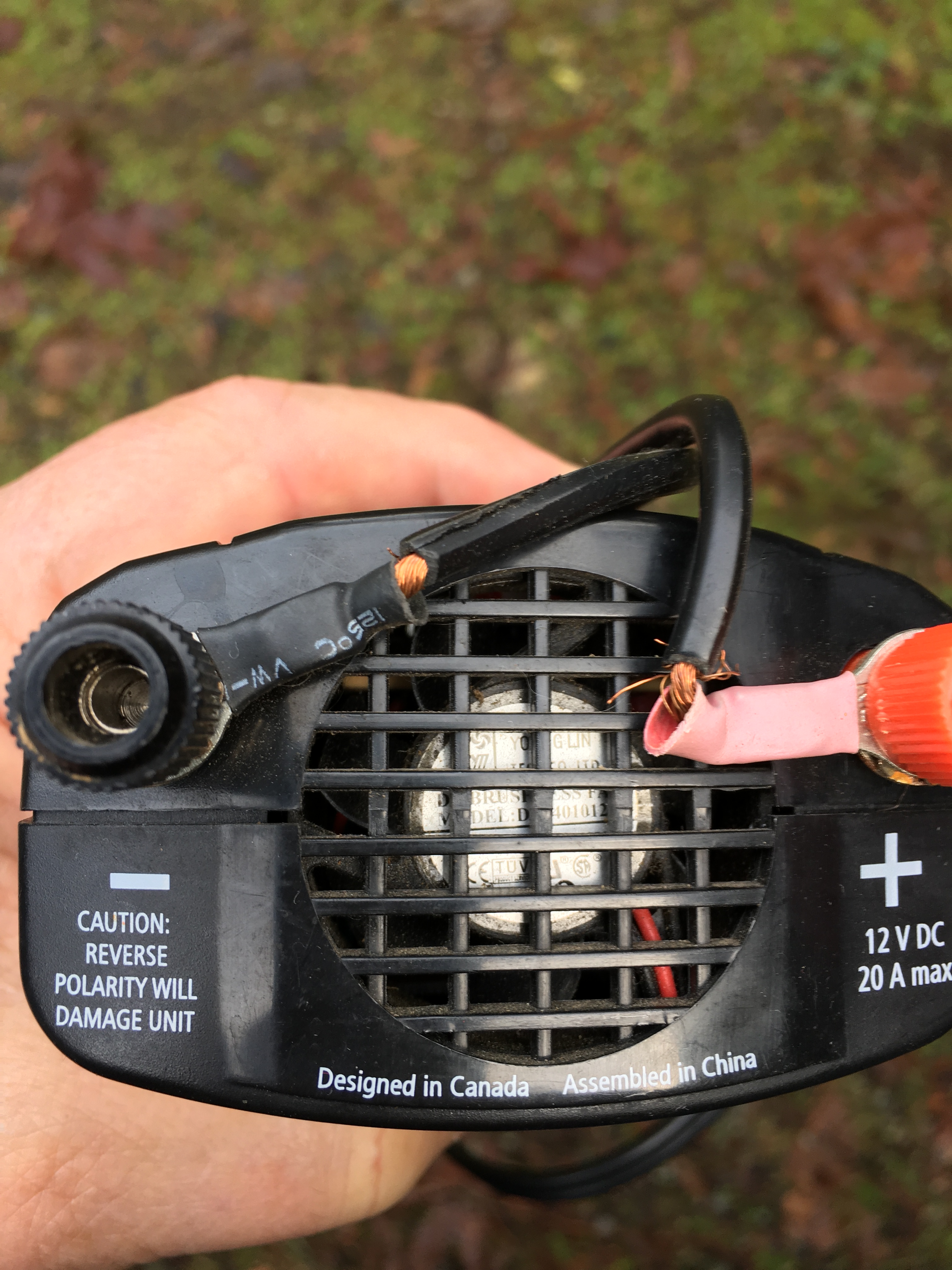
So, have a look at this photo of a power inverter we own. It converts twelve volt DC into 120 volt AC current. It says it was designed in Canada and Assembled in China. I’m assuming it was designed by a Canadian company, but I don’t know. I’d have to do more research because there are many possibilities. It could be that it was designed by a Canadian company for another Canadian company, or it could have been designed by an American company with a Canadian affiliate. It is called the Motomaster Eliminator, which means that it was manufactured by some business to be sold in Canadian Tire stores. There’s no way that Canadian Tire manufactured it. Canadian Tire contracts with manufacturers to build things and put the Motomaster name on them. So, is our inverter a product of Canada or China? There is no manufacturer named on the product. It’s getting to be more and more difficult to identify the sources of the commodities we regularly consume. The inverter says it was assembled in China, but were all the parts that make up the inverter made in China? Not likely. They could have been made anywhere in the world and shipped to China for assembly.
It used to be that the Ford Motor Company manufactured all of their cars in Dearborn, Michigan. The plant, which was huge, took in raw materials from all over the world and converted those raw materials on site into parts that were then assembled on site. Not any more. Now Ford cars have parts that come from all over the world, components manufactured and assembled in various locations into transmissions, engines, etc., then assembled to completion in Michigan, or in other plants here and there in the world, including in Canada.
Very few value-added products are now manufactured from scratch in Canada or in any other country, for that matter. Much of ‘Canadian’ raw material gets shipped overseas or to the U.S. for use in a multitude of commodities. Nationalism is no longer a factor in economic decision-making unless there is money to be made in using attachment to country as a marketing tool. It’s common for ‘Canadian’ businesses to do this when and if they can. It’s possible that some business owners have a real affinity for their country, but even then, the underlying logic is still making money.
In another aspect of this situation it’s notable that in many circumstances, along with our power inverter, many commodities are designed in North America and manufactured elsewhere to take advantage of cheap raw materials and labour-power. Truth is we live in a very complex world while people want to see nothing but simplicity in it. You tell me if when I use the toothpaste we just bought that says on the package that it was made in Mexico that I’m brushing my teeth with Mexican toothpaste? No? Then what am I doing and why does it matter so much to some people?
Big business in the form of multinational corporations is pretty much operating within its own world of supply chains and profit and loss statements. It raises its head about the money well only long enough to sniff the air to see what is going to be the next vehicle for their drive for profit. That will not cease anytime soon but it will cease. The race is on to see whether corporate capitalism collapses from its own internal contradictions before the planet sheds us for our excessive consumption and disregard for other life forms. I have no idea what the outcome of this race will be but it may be that both processes happen simultaneously. In that case, Armageddon here we come. Glad I won’t be around for that.
 Roger Albert - Always a Sociologist: Now Living With Myeloma