# 66. Pain for Gain, Fall Colours in the Garden, and Under the Microscope.

Pain For Gain

Re: the art of tying knots on the scourge so as to experience the most exquisite pain so as to deny our bodies and bring us closer to God.

When I was twelve years old in 1959 my parents sent me off to a private Catholic boarding school in Edmonton, the Collège St. Jean. I boarded a CN train with some forty boys from British Columbia destined to make up a substantial minority of boarders at this school. No way I was going to be left behind. I’m sure I begged my parents to allow me to join my peers in Edmonton. The College was run by Oblate priests (Oblats de Marie Immaculée), a Catholic missionary order founded in France in 1816. 

In this post I don’t focus on my attendance at this school although that is a topic deserving of its own exploration. No. My interest here is to highlight aspects of the life and activities of one of the Brothers who worked at the College from its inception in 1908-11 until 1947, the year of his death. His name was Frère Antoine Kowalczyk. He was born in Poland in 1866, moved to Alberta in 1897 and died in Edmonton in 1947 after serving the College for some thirty-six years. During his tenure at the College he was one of two Oblate Brothers.

Oblate Brothers acted as custodians, gardeners and caretakers. They did the grunt work around the place along with a contingent of nuns from the congregation of Les Soeurs de la charité d’Evron who fed us, did our laundry (poor women), and looked after the infirmary. Oblate priests were our professors (with the odd exception) and served as the College administrators.

Brother Anthony (Frère Antoine) died in 1947, a few months after I was born so there was no chance I would ever meet him. The good Brother would not be alive to see the major expansion of the College in the 1950s, but the College did everything it could to keep his memory alive because Brother Anthony was special. Normally, he would have received a nice funeral and would be buried in the Oblate cemetery in St. Albert, not far from Edmonton, and then all but forgotten. That was not to be for Brother Anthony. Yes, he did have a nice funeral and yes, he is buried in St. Albert but he has not been forgotten.

Because of his exemplary life, Frère Antoine is being considered for sainthood and has been for quite some time. The local Catholics would love to have a real honest-to-goodness saint come out of their community. We all want our heroes. Brother Anthony was to become one of Edmonton’s Catholic heroes and saints-to-be.

I recall reading a number of extremely laudatory tracts about Frère Antoine when I was a student at the College and I still clearly remember the grotto that he built to the Virgin Mary which probably still stands next to the College’s administration building. Some of his personal effects were on display in the main College building. They are what interest me the most about Frère Antoine along with the efforts to have the Vatican declare him a saint.

The glass encased display of his personal effects included his rosary and breviary along with more mundane items such as his cassock, candle holders, and some tools. For me, the most striking item in the display was his scourge, the whip he used for self flagellation. When I first laid eyes on the scourge at age 12 or 13 I was astounded as to why anyone would want to inflict pain on themselves as Frère Antoine obviously had. How could that be? Pain was a bad thing, wasn’t it? Well, maybe not always.

Pain is important as a signal that something isn’t quite right in the body. People who cannot feel pain may hurt themselves in a myriad of ways without knowing it. The condition called congenital analgesia is extremely rare. Less rare is the situation in which people deliberately hurt themselves. People, mostly youths, cut themselves with razors, knives, and other sharp things for a myriad of reasons. I don’t think Brother Anthony whipped himself for the same reasons ‘cutters’ do.

For Brother Anthony, whipping himself or self-flagellation was a means of punishing or mortifying the flesh. Why? Because the flesh is weak now isn’t it? Succumbing to its many potential delights in eating, sex, and just plain moving is considered by Catholic theology as a (if not the) most important source of sin in the world. The seven deadly sins are, in fact, mostly about denying the pleasures of the flesh. After all, the flesh dies while the spirit lives for eternity as the story goes. Most religions in fact promote the spirit as the vehicle for eternal life. I guess it’s just an easy step from avoiding sin to actively ‘mortifying’ the flesh, that is to punish it physically for being the source of death.

But Brother Anthony wasn’t content with a wee bit of self-flagellation during Lent. He spent time with his scourge. What I remember of it, his scourge consisted of several leather strands with knots tied carefully at intervals to intensify the pain and help to cut the flesh. The story is that he whipped himself regularly as he fought with his devil flesh.

I refer to Brother Anthony here specifically because he is a flagellant of my past, but the institution of self-flagellation is not just a Catholic thing. It’s also a practice of Shia Islam and Judaism although in no religion is it standard practice. It’s generally practiced by the over-zealous as is certainly the case in the Philippines and elsewhere. Brother Anthony certainly was zealous and it strikes me that the aim to canonize him is partly based on his zeal.

Reading about the myriad ways in which people deliberately cause themselves pain has not led me to reconsider my attitudes towards pain. For me pain is not something I experience with joy. It is a reminder to me of the weakness of the flesh for sure and of my mortality. That’s fine. I accept that.

If there’s one thing that is common to all human culture it’s the denial of death, and consequently, the promotion of the spirit as the essence of being and as our way to immortality. That’s not a universal value to which I subscribe so my pain and I have to live with each other ’til death do us part.

Fall Colours in the Garden

Our garden is flush with colour from the earliest days of spring and well into the Fall. Now is the time for dying and dead leaves to put on a show, extending the dominance of colour before bare branches impart a new dynamic to the garden along with some evergreen trees and shrubs that are just that, ever green. Below you can see pictures of blueberry bushes in full Fall splendour along with some maples, red and Japanese, Virginia creeper, and sumac.

Under the Microscope

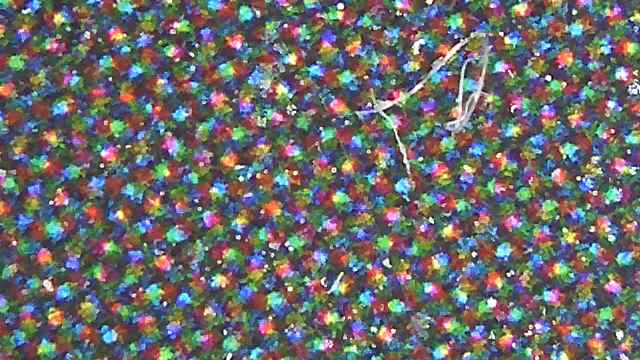
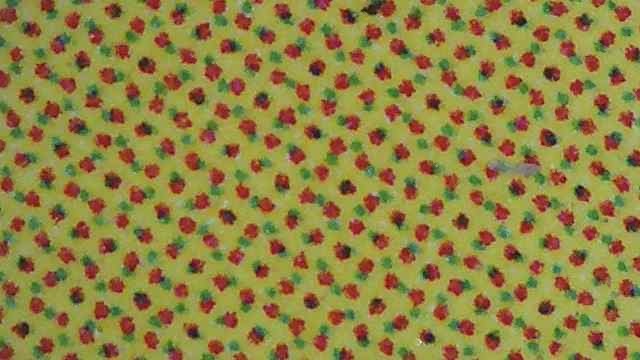
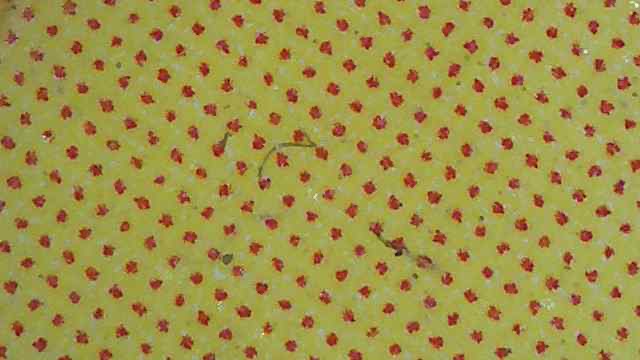
Nothing extra special about this set of images. The first one is of my blood. It’s red, not surprisingly. The blue is a photo of a rough blue paper. The other three are yellow and black. The multicoloured one is in fact black to the naked eye, black being the sum of all colours. The one with only red dots is a light yellow and the one with red and green dots is a darker yellow.

43 – Plugged in!

Time to reëvaluate! (yes, an umlaut is traditional on the second e in this word). Call me a linguistic traditionalist. So, I’ve posted over forty entries in this blog directly or indirectly on my experience with myeloma. That’s over forty-five thousand words. That’s a lot. Now, the novelty of my daily chemo grind is wearing off and even though I’m thoroughly exhausted most of the time, I’m getting restless. I may force myself to draw this afternoon. There’s some lovely forsythia outside the living room window that I admire every day. Right now it’s vivid yellow, like the daffodils coming up here and there in the yard. I’ll see if I can draw them, if I can steady my hand enough.

With the SARS-2-Cov Novel Corona virus nipping at our heels, it’s tempting to move on to discuss Corvid-19 and leave my myeloma stuff on the back burner. Well, that’s not going to happen. I’m not keen to add anything to the overwhelming internet chatter on the pandemic. You won’t find any tips or suggestions on how to deal with it here. So, I’m going to move on to some extent. I’ll still post entries on my myeloma experience if they’re relevant and new and I will post material on myeloma and Covid-19 if that’s relevant too. For instance, there was a Webinar yesterday organized by Myeloma Canada specifically about myeloma and the pandemic. It didn’t add much to what I already know. In a few minutes the local Myeloma Support group is having a round table by Zoom. We’ll see how that goes. I’ll report back. Reporting back: well, that was interesting. Zoom is unknown territory for most people so it took some time to get the teleconference off the ground. But once launched, we got to see people we had only previously communicated with by email or on the phone. Some interesting conversation around drugs and dosages along with tips on navigating the medical system. Some discussion around what people are doing to stay safe in the face of Covid-19. Physical distancing seems to be the main strategy. I went to the hospital this morning (Monday, March 30th) to get bloodwork done. Chemo patients were supposed to be segregated from the others in the waiting room but somebody didn’t get the memo because that didn’t happen. There was one woman in there who coughed the whole time. At least she was wearing a mask. So was I, for that matter.

This is a great time to be a sociology, not such a great time to have myeloma, but then what would be a great time to have myeloma?

I’ve been re-reading What is Sociology? over the past few days giving me a renewed appreciation of Norbert Elias’ work. His language is different from conventional sociology, particularly functionalist sociology, and it’s a bit of a challenge to work with concepts like ‘figuration’,’ interweaving’, and ‘interdependencies’, language I’m not that familiar with. I get a lot from his work. I have a challenge for you too based on it.

So many of us, following the dominant capitalist morality in our world have a strong commitment to individualism and individuality. We crave to be ‘different’ from everybody else and we downplay our dependencies on others while we extoll the virtues of self-sufficiency. We laugh at people in their late teens and early twenties who still live with mommy and daddy and who obviously haven’t achieved the level of independence expected of them. I used to challenge my students. So, I’d say, “you think you’re self-efficient and independent. Well, think about this: Think about unplugging your home. Think about no more water lines, no electricity coming through the wires you never think about until it’s time to pay the bill. No sewer connection. No internet. No phone. No mommy and daddy wallet. Nothing. Now do you still think you’re self-sufficient? Now, shut down the grocery store to anything not grown or produced locally. I don’t mean just the food, I mean the packaging, the jars, the plastic milk containers. All of these things are produced in factories all over the world. You are connected to every worker in the banana plantations of Ecuador, the battery factories in Mexico, the food processing plants all over the world. You depend on them every day. Do you think about that when you peel a banana or put batteries in your headphones? What if we shut down Home Depot, Canadian Tire, Home Hardware, etc. The tools you buy there: Where do you think they are they made? Mostly China these days, in factories contracted by American corporations looking for cheap labour, and escape from Labour and Safety laws, and taxes. These corporations have exported their pollution to China. Not that that was ever a consideration in their decision-making. I could write a book on globalization and how we tend to misunderstand it based on old ways of thinking about the nature of countries, their sovereignty and their relations with other countries. Now the shit has hit the fan, and the whole globalist agenda is under question. But I don’t want to get into that right now. Instead, I want to challenge you in another way.

So, we tend to see ourselves as ‘substantiates’ (an Elias term), which means we see ourselves as things separate from other things. We contrast ourselves with larger things like ‘the environment’ or ‘society’, both we think of as real. Well, what if you asked yourself: What is it about me that is essential for my survival as an organism? Then, what is ‘outside’ of me that is essential for my survival? To start, let’s think about our biology.

Our survival depends on organismic integrity. That means that our bodies have to hang together. Of course, we don’t often think in those terms. It seems self-evident that our bodies hold themselves together, so to speak, with connective tissue, skin, bone, and various fluids. That said, our bodies soon cease to ‘hang together’ if we don’t incorporate ‘things’ from the outside to ensure this process continues. So, what ‘things’ from the outside of us are critical for our survival? Or put another way, if we didn’t ‘have’ these things, how long would we survive? One ‘thing’ we often take for granted is air. Suffocation is probably the quickest way of killing someone outside of blunt force trauma or other form of violence. No air=death in minutes. Again, passively speaking, the lack of water is probably second on the list of things the absence of which produces death fairly quickly. Probably food after that, although shelter, that is critical protection against extremes in temperature and weather, is also critical.

So, in summary, it’s fair to say that the human organism generally hangs together fairly well in the absence of blunt force trauma, evisceration, and amputations of various sorts. It cannot survive for long, however, without the right environmental conditions, air, water, and food. Nor can it survive without the means of waste evacuation. It’s really quite absurd, then, to think about ‘ourselves’ as independent of the ‘things’ out there that we need for survival. We don’t exist without them. See if you can imagine yourself ‘plugged in’. Imagine tubes entering your mouth for water and food, into your nose for air, attached to your butt for evacuating solids, and a catheter for you know where. The fact is that ‘you’ and ‘I’ extend far beyond the boundaries of our bodies. The way we see ourselves as independent things opposed to other independent things flies in the face of reality. So, yeah, we live in an illusory world.

Of course, the picture is much more complicated than even that. When we are conceived, at that moment, we begin to transform the world around us, into us using the ‘food’ available coming through the placenta and umbilical cord. That process continues after birth at an accelerating rate for many years before it slows down in early adulthood in an arc towards death. That’s where I’m at, on the arc towards death. Entropy rules. It’s no fun, but it rules.

In my next post I address the way we are socially connected over generations, in time, and in space. If Covid-19 is doing anything it’s highlighting our interdependence and mutual interests. Will we finally take our connections seriously?

37 Me, my Body and I: Part 3

It’s time to wrap up this diatribe. Like I said at the end of my second post in this series, I’ve strayed a long way from the usual content of this blog. After this post I have to reconsider my work here. I’m getting into the long stretch of road in my chemotherapy treatments. I’m getting tired and you must be getting tired of reading this stuff. The end of this part of my road is at least six months away. Things are looking good according to my lab results, but who knows. Every day brings something new which may be fodder for this blog, maybe not. Whatever. I do have to tell you about a recent weird experience I’ve been having, but that will be for my next post.

In this post, the third in the series about what will happen to ‘me’ after “I” die, I want to suggest that our conception of our selves, especially our idea that we are beings composed of mind, body and soul, is socially-constructed. In a sense though, it matters not where these ideas come from if they have a real impact on my life.

By way of an example, if I have a stroke, for instance, I may attribute it to a curse put upon me by a disgruntled recently past relative for a purported wrong that I did him. However, it’s far more likely that my stroke was brought on by a busted artery in my brain. Nonetheless, the stroke and its consequences are what they are never mind their provenance. Durkheim stated that no religion is false. By that he meant that, in my example above, the stroke is real no matter where and how we think it originated. A more contemporary sociologist who wrote extensively on religion, Peter Berger, argues that much of what we call religious behaviour and even religious thinking and hypothesizing cannot be understood by deduction or reduction. He proposes that we use induction to figure out the ‘reality’ of religious experience, that we start with how we feel and experience in real terms, in our living beings, and acknowledge those feelings as real before we attempt any kind of explanation of them. This kind of fits with Unamuno’s views, although Berger is much more prosaic than Unamuno the poet-philosopher.

The provenance of the ‘soul’ is interesting and there is much speculation about it as originating in our dreams, for instance, or during hallucinogenic experiences, but once a belief in the ‘soul’ is socially established it, it has real world consequences.

Today, I intended to address the work of Emile Durkheim and Ernest Becker with maybe a little Max Weber, Karl Marx and Norbert Elias thrown in for good measure but I’ve decided not to do that in any formal sense. I have come to accept the futility of trying to summarize very complex arguments from a number of writers and how they interconnect at least in a relatively short blog post. I’m not here to convince you that I’m right anyways.

That said, all the above characters were sociologists except for Ernest Becker and he would definitely qualify as an honorary sociologist. They all conclude that religion and all ideas concerning souls, demons, angels, gods, and various other supernatural beings originate in society (i.e., in the family, school, church, law courts, governments, etcetera) defined very broadly. However, whatever their origin, religious, metaphysical ideas have real world consequences according to these guys. That’s clear.

Before getting any further into this post, I want to tell you a little story. You might be shocked to learn that I wasn’t always the model son. Sometimes I could be downright annoying and troublesome for my mom, and she didn’t deserve any bullshit from me. But she got some anyway. I remember one time (of several) when I was particularly obnoxious and teased my poor mom relentlessly.

I said to my mom: “Ma, if you had been abandoned on a desert island as a baby and were raised by monkeys, would you still be the same person you are now.”

“Yes,” she says, “of course.”

I retorted: “But what language would you talk? Would you talk monkey talk? What things would you believe? Would you believe in God?”

She replied something along these lines: “I would believe in God and I’d be the same person I am today. I don’t know any other languages besides French and English and why would I believe anything different than I do now?”

That was my mom. She wasn’t stupid by any measure, but she was ignorant in many ways mostly because she was busy raising a pack of kids and she was way too tired to be very curious and she couldn’t read metaphysics. By her answers to my questions she demonstrated a naïveté that ran deep but that allowed her to live her life in relative contentment. If my mom was ignorant in some ways, she was very knowledgeable in others. She raised tons of children, made bread like a pro and was a dedicated member of her church (although she didn’t know much about Catholic theology beyond what was in the Sunday missal). Later in her life she took up woodworking and was good at it, that is until my dad decided to sell the house and the shop from under her. After that, she fell into dementia and never recovered. I think she lost her appetite for life at that point. I loved my mom, I really did, and I regret teasing her. That’s one of my big regrets in life.

So, what was it about my mother’s responses that is significant for me here? I guess I was shocked by her very strange idea of her personhood and her unstated notion that ‘she’ was an unchanging, unchangeable being regardless of her surroundings and upbringing. It’s plain to me and I expect to most people that everything we know we’ve learned from others, either directly from other people in our homes, schools, churches, and from books or from any number of other sources. Of course, that includes any kind of ‘spiritual’ ideas we may have as well as our sense of immortality. Elias argues that we are not the individualists we think we are. He says humans are really interdependencies and interweavings. No human ever stands alone given the richness of the sources of our ‘selves’. The language(s) we speak, our gender, our cognitive skills, intelligences, values, religious/spiritual beliefs, etcetera are all learned, that is, socially derived.

It’s clear to me that my mother denied the influence of any possible ‘foreign’ source of her personhood. Obviously, there is no way my mother could know of her Catholic God if she was raised by monkeys on a desert island. The concept of God, like of language, and table manners is learned. How would my mom learn about the Catholic God? Many societies have concepts of God or gods or some such supernatural beings. There are hundreds (and there have been thousands) of religions on the planet, each with its own unique conception of immortality and supernatural beings (if they conceive of any). Babies born into those societies learn the rules and values of their specific communities. Why would my mother not realize that her position was untenable? I would suggest that her commitment to her beliefs outweighed any sense she might have had about the logical inconsistency of her position. She was like a Trump supporter in that sense. She may have been yanking my chain, but I doubt it.

Which god do you worship (if any)? Well, if you do still worship a god, probably the one your parents do (or did). These days, however, there is a movement towards more individualistic, personal forms of spirituality, a trend which fits in nicely with capitalist morality, individualism and consumerism while allowing people to retain a belief in the immortality of the ‘soul.’ It’s also true that significant numbers of people are now defaulting to atheism or agnosticism in greater numbers than ever before, a movement also compatible with capitalist morality. There is still a great deal of intergenerational retention going on today even if there are obvious exceptions. So the frontier mentality of rugged individualism and fending for yourself is still a thing in the Twenty-first Century. Of course, as individuals, we can be creative, and come up with new ideas and ways of doing things but we always do so using materials, processes and relationships that already exist. How else could it happen?

The truth is, we, none of us, can conceive of anything absolutely new under the sun. Everything we invent, think about, or imagine has roots in our interactions and interdependencies with other people via our social relations, past and present. The present is always built on the past. Inventions are generally new conceptions of how to use and combine already existing technologies or ideas. That means that new religious denominations or churches are invariably modifications on past ones. How many variations on Christianity are there? Lots…I haven’t counted them. Which one is the ‘true’ variant?

As I note above, one perspective all the writers and thinkers I mention above have in common is that they all agree that religion and our ideas of personhood originate in society as does the belief in immortality. Durkheim, for example, argues that the concept of God is actually a personification of society, a personification that can then be used to judge the behaviour of adherents still living. Elias in his book What is Sociology? builds a conception of individual/societal interaction by using a metaphor of a card game. In his metaphor, a card game is happening with four or five players. The game has rules, of course, to which all players must adhere. Then, one person decides to leave the game and another person joins in. That change of players does not affect the game, nor the rules. The new player must adhere to the rules like the drop-out did. The game is a metaphor for society. We are born into society, learn all the rules, then leave (die). Society goes on. The game goes on. Society, seen from this perspective, is supra-human. It exists above and independently of any individual yet has control over all individuals and circumscribes the parameters of possible ideas and decisions individuals can make. No wonder we come to think of it as divine.

Because society is supra-human and veritably invisible to most people, it’s not a stretch to understand why people ascribe to it a supernatural existence disconnected from their individual lives. Because it IS disconnected to their individual lives in a real sense. As Elias would say, the game goes on no matter what individuals do as players. To which Durkheim would add: the individual ‘soul’ is in the game but is actually a piece of the collective, social SOUL. Therein lies our idea of its immortality. Society exists before us and after us. It’s virtually immortal. Our souls are immortal because they are a piece of the greater social SOUL.

Durkheim defines religion as: “a unified system of beliefs and practices relative to sacred things, that is to say, things set apart and forbidden — beliefs and practices which unite into one single moral community called a Church, all those who adhere to them.” (from Elementary Forms of Religious Life, 1912) For Durkheim, sacred things are by definition social things and the sacredness of things can change with changing social conditions.

Ernest Becker goes much further than Durkheim when he argues that culture as a whole is sacred. For Becker there is no distinction between profane and sacred. It’s culture as a whole that promises people immortality. In fact, he argues that “Each society is a hero system that promises victory over evil and death.” (from Escape From Evil, 1975, page 124)* Of course, no society can promise such a thing. Becker writes:

But no mortal, nor even a group of as many as 700 million clean, revolutionary mortals, [in reference to China] can keep such a promise, no matter how loudly or how artfully he protests or they protest, it is not within man’s means to triumph over evil and death. For secular societies the thing is ridiculous: what can “victory” mean secularly? And for religious societies victory is part of a blind and trusting belief in another dimension of reality. Each historical society, then, is a hopeful mystification or a determined lie. (EFE, page 124)

Marx would have agreed with Becker here but he concluded that religion was the opium of the people, a salve to soothe the savage treatment that most people received under capitalism (as one might find depicted by Charles Dickens.) He found that religious beliefs were instrumental in mollifying the masses and having them accept class inequality under capitalism. Weber also recognized the class basis of religion although his definition of class was not the same as Marx’s. Weber, in his Sociology of Religion, addresses the early rise of religious behaviour in human interaction with drastic natural events like floods, volcanic eruptions, hurricanes, tornadoes, etcetera, the ‘soul’ in its various iterations and manifestations, and ritual. He argues that the forms of gods varies depending on natural and social conditions.

In conclusion, I just want to re-emphasize the notion that according to the sociologists I mention here as well as countless other sociologists and social scientists I don’t mention, ‘society’ is the source of our beliefs about the immortality of our person by way of our ‘souls.’ There is no ‘supernatural’ teacher that teaches us our values around immortality, and any ideas we have around these notions come from notions already just laying about out there waiting to be picked up and incorporated into our world view. In other words, our ideas around the immortality of the ‘soul’ do not result from perceived connection to an immortal God or gods, but from the immortality of society.

______________________________________________________________________

*There is no substitute for reading Becker because his argument forms a cohesive whole. Pulling a quote out of his book, although provocative, is probably not helpful although I do it. I can’t help myself. If it spurs people to go read Escape From Evil so be it. Many of my early posts on this blog constitute a review of EFE. That would be a place for you to start in trying to understand his work. Just type Becker in the search box in my blog and you’ll find the relevant posts all numbered and everything or you can start here: https://rogerjgalbert.wordpress.com/wp-admin/post-new.php?post_type=post&jetpack-copy=874. You can then work your way through the archives on my blog site.

Durkheim (Elementary Forms of Religious Life) and Weber (The Sociology of Religion) both have sections of their books on the soul. Do a bit of research if you’re curious. Dr. Google is full of stuff on these guys and I’ve got all the books for local people to borrow if you’re interested. Elias is great. His book The Civilizing Process is well worth the read.